

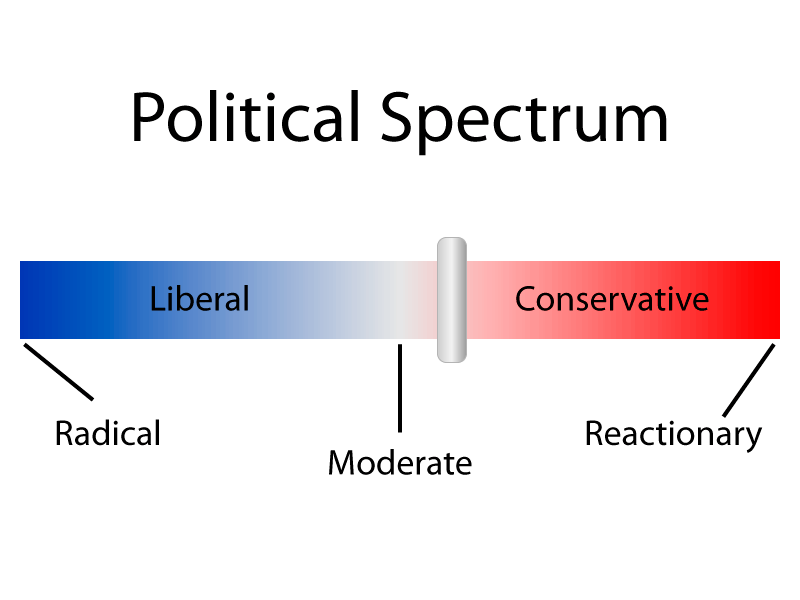
When people discuss politics, three labels appear again and again: moderate, liberal, and conservative. Understanding the differences in the debate around moderate vs liberal vs conservative helps you interpret elections, policy debates, and media coverage with greater clarity.
Despite the widespread use of these terms in the United States, their interpretations can differ based on history, culture, and nation. In American politics, however, they generally describe positions along a spectrum of beliefs about government power, economic policy, and social values.
Let’s break it down clearly and practically.
What Is a Liberal?
In modern U.S. politics, a liberal typically supports a more active role for government in addressing economic inequality, protecting civil rights, and regulating industries.
Liberal ideology today is most closely associated with the Democratic Party.
Core Principles of Liberals
1. Government as a tool for social change
Liberals believe government can reduce inequality and expand opportunity through public programs.
2. Economic intervention
Liberals advocate for progressive taxation, minimum wage increases, and regulations on corporations.
3. Expansive civil rights protections
We strongly advocate for racial equality, LGBTQ+ rights, reproductive rights, and voting access.
4. Environmental protection
Liberals strongly advocate for climate policies and renewable energy initiatives.
In short, liberals generally see government as a positive force that can create fairness and protect vulnerable groups.
What Is a Conservative?
A conservative typically supports limited government involvement, free-market capitalism, strong national defense, and traditional social values.
The Republican Party most commonly aligns with conservatism in the U.S.
Core Principles of Conservatives
1. Limited federal government
Preference for lower taxes, fewer regulations, and more power to states.
2. Free markets
The belief is that businesses and competition drive innovation and economic growth more effectively than government planning.
3. Traditional social values
Support for religious liberty, traditional family structures, and stricter law enforcement policies is evident.
4. Strong national security
Emphasis on military strength and border control.
Conservatives generally argue that too much government involvement reduces individual freedom and economic efficiency.
What Is a Moderate?
A moderate occupies the middle ground between liberal and conservative ideologies. Rather than consistently aligning with one side, moderates evaluate issues individually.
Moderates exist within both major parties and among independents.
Core Characteristics of Moderates
- Support for bipartisan compromise
- Balanced fiscal policies
- Mixed views on social issues
- Pragmatic, case-by-case decision-making
For example, a moderate may support business tax incentives (often conservative) while also backing expanded healthcare access (often liberal).
Moderates tend to prioritize stability, incremental reform, and cooperation over ideological purity.
Moderate vs Liberal vs Conservative: Side-by-Side Comparison
| Issue | Liberal | Moderate | Conservative |
|---|---|---|---|
| Role of Government | Active and interventionist | Balanced | Limited |
| Taxes | Higher on wealthy | Adjust as needed | Lower taxes |
| Healthcare | Public options or universal coverage | Mixed systems | Market-driven |
| Social Issues | Progressive | Mixed | Traditional |
| Environmental Policy | Strong regulation | Measured action | Minimal regulation |
Remember: real people rarely fit perfectly into these boxes. Political identity is a spectrum, not a strict category.
Historical and Global Context
Political labels change depending on country and era. For example, in the United Kingdom, “liberal” historically referred to classical liberalism—emphasizing free markets and limited government, ideas that overlap with American conservatism.
Even within the United States, societal norms can shift, transforming what was once considered moderate into liberal or conservative views.
Why Understanding These Differences Matters
Knowing the difference between moderate vs liberal vs conservative helps you:
- Evaluate political candidates beyond party labels
- Understand policy debates more clearly
- Identify your own political values
- Engage in more productive conversations.
For example:
- Should healthcare be primarily private or publicly funded?
- Should taxes increase to fund social programs?
- How much should the government regulate businesses?
Your answers often reflect where you fall on the ideological spectrum.
Common Misconceptions
Myth 1: Moderates have no strong beliefs.
Not true. Moderates often hold strong views but reject extremes on either side.
Myth 2: Liberals want unlimited government.
Most liberals support regulation but still value democratic limits and accountability.
Myth 3: Conservatives oppose all change.
Conservatives may support change but often prefer gradual reforms rather than rapid transformation.
FAQs
1. Can someone be both liberal and conservative?
Yes. Many people hold a mix of beliefs—for example, socially liberal but fiscally conservative.
2. Is moderate the same as independent?
No. A moderate can belong to a political party. “Independent” refers to party affiliation, not ideology.
3. Which ideology is the most popular?
It varies by country, region, and generation. Political alignment shifts over time.
4. Do moderates decide elections?
Often, yes. In competitive elections, moderate voters can influence outcomes significantly.
5. Are these labels permanent?
No. Political ideologies evolve as society changes.
Conclusion
The debate around moderate vs. liberal vs. conservative reflects deeper philosophical differences about government power, individual freedom, economic fairness, and social values.
- Liberals emphasize equality and government intervention.
- Conservatives prioritize limited government and free markets.
- Moderates seek balance, compromise, and practical solutions.
Understanding these distinctions allows you to better navigate political discussions and form more informed opinions. Recognizing the spectrum between liberal, moderate, and conservative reveals a more nuanced and realistic picture of modern democracy, instead of viewing politics as a binary concept.