
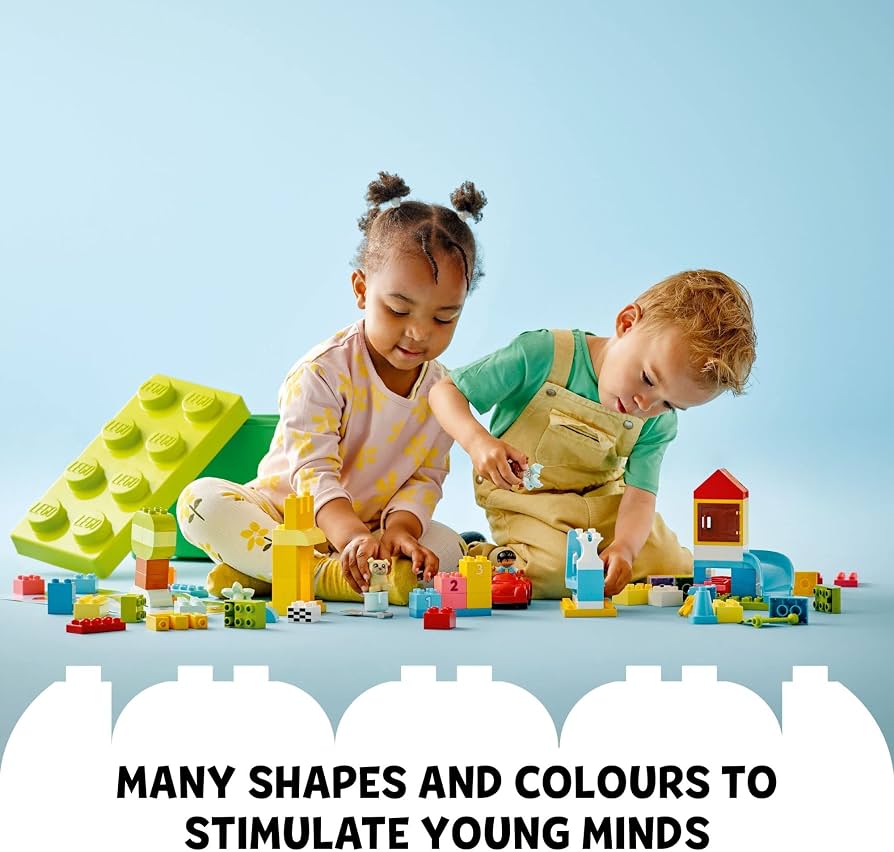
Long before a child is ready for the small, intricate bricks of a standard Lego set, there’s Duplo. Bright, chunky, and built to survive a toddler’s grip (and occasional throw), Duplo has introduced generations of young children to the world of building and imaginative play. Here’s everything parents need to know about Duplo Legos, from age recommendations to the benefits behind the brand’s enduring popularity.
What Is Duplo Lego?
Duplo is the LEGO Group’s line of building bricks designed specifically for young children, typically aged one to five. The name comes from “double,” referring to the fact that Duplo bricks are roughly twice the size, length, width, and height, of standard Lego bricks. This isn’t just a design quirk — the larger size is what makes Duplo safe and manageable for toddlers, whose fine motor skills and hand strength are still developing.
Duplo bricks are also compatible with standard Lego bricks in terms of connection points, meaning a Duplo brick can technically be stacked with regular Lego, even though the size difference makes complex combined builds impractical. This compatibility is intentional, designed to create a gentle transition as children grow from Duplo into the wider Lego ecosystem.
A Brief History of Duplo
Duplo was introduced by the LEGO Group in 1969, developed specifically to bring the brand’s building concept to a younger audience. Since then, it has grown into one of LEGO’s most enduring product lines, expanding well beyond basic brick sets into themed collections covering everything from farm animals and trains to popular children’s characters and vehicles.
Age Recommendations for Duplo
Most Duplo sets are labelled for ages 1.5 to 5 years, though this varies by specific set and the complexity of the build. Basic brick sets and simple animal or vehicle pieces tend to be suitable from around 18 months, while sets with smaller accessory pieces, opening doors, or more intricate builds are typically recommended for children closer to three or four.
As with any toy involving small parts, it’s worth checking the specific age guidance and choking hazard warnings on individual sets, since some accessory pieces are notably smaller than the standard bricks.
Popular Duplo Sets and Themes
Duplo covers a wide range of interests, which is part of its lasting appeal:
- Classic brick boxes — large tubs of basic bricks in varied colours and shapes, ideal for open-ended building and often the first Duplo set a child receives.
- Farm and zoo animal sets — chunky animal figures paired with simple structures like barns or enclosures, popular for imaginative and role-play.
- Vehicles and construction sets — trucks, trains, and diggers that combine building with pushing and moving play.
- Character-themed sets — collections featuring popular children’s TV and film characters, which tend to appeal strongly to slightly older toddlers and preschoolers already familiar with those characters.
- Town and community sets — small-scale versions of everyday places like a school, supermarket, or fire station, useful for introducing basic social concepts through play.
Benefits of Duplo Play
Fine motor skill development. Pressing bricks together and pulling them apart strengthens the small muscles in a toddler’s hands, laying groundwork for skills like holding a pencil later on.
Early problem-solving. Even simple building, working out how to make a tower stand up or how two pieces fit together, introduces basic cause-and-effect reasoning and spatial thinking.
Creativity and imaginative play. Open-ended brick sets, in particular, let children build whatever comes to mind rather than following fixed instructions, encouraging independent, creative thinking.
Language and social development. Duplo is often used in shared play between a parent and child or between siblings, creating natural opportunities for describing colours, shapes, and actions out loud.
A gentle introduction to Lego. Because Duplo connects with standard Lego bricks, it helps build the hand strength and building confidence a child will eventually need for smaller, more detailed Lego sets.
Duplo vs. Regular Lego: What’s the Difference?
The core difference is size and complexity. Duplo bricks are significantly larger, reducing choking risk and making them easier for small hands to manipulate. Regular Lego bricks are smaller and allow for much more detailed, intricate builds, but come with a higher minimum recommended age, typically four years and up, due to the choking hazard posed by small pieces.
Sets also differ in design philosophy. Duplo sets tend to favour simple, sturdy structures built for open-ended and role-play use, while standard Lego sets increasingly lean toward detailed, instruction-based builds aimed at older children and even adult collectors.
Tips for Buying Duplo Sets
Start with a basic brick box. Before buying themed sets, a large tub of classic bricks gives the most flexible, long-lasting play value.
Match the set to current interests. Character or animal sets tend to get more engagement when they connect to something the child already loves, whether that’s a favourite show or animal.
Check for mixed compatibility. If you already own Duplo from an older sibling or hand-me-downs, most sets across the years remain compatible, making it easy to combine older and newer pieces.
Consider storage early. Duplo collections grow quickly. A simple storage tub or basket makes clean-up far more manageable than trying to sort pieces by set.
FAQs
What age is Duplo Lego suitable for? Most Duplo sets are designed for children aged 1.5 to 5 years old, though this varies depending on the specific set and its included pieces.
Is Duplo compatible with regular Lego bricks? Yes, Duplo bricks can technically connect with standard Lego bricks, and this compatibility is intended to ease the transition as children grow older.
Why is Duplo bigger than regular Lego? The larger size makes Duplo safer for toddlers, reducing choking hazards and making the bricks easier for developing hands to grip and connect.
What are the main benefits of Duplo play? Duplo supports fine motor skill development, early problem-solving, creativity, and language development through shared play.
When should a child move from Duplo to regular Lego? Most children transition around age four or five, though it depends on individual hand strength, coordination, and interest in smaller, more detailed builds.
Are Duplo sets worth buying if I already have basic bricks? Themed sets can add specific play value, such as role-play or storytelling, but a basic brick box remains the most versatile long-term investment.