
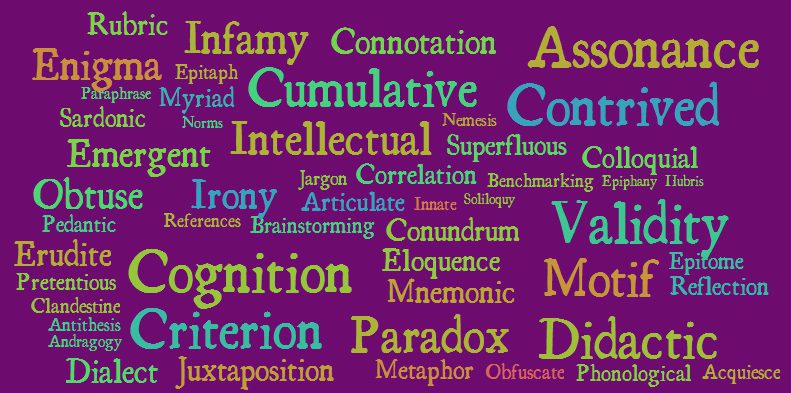
Words are the building blocks of communication. Whether you’re writing an email, giving a presentation, or simply chatting with a friend, the vocabulary words you know—and how well you use them—shape how clearly you express yourself and how others perceive you. A strong vocabulary isn’t just a sign of intelligence; it’s a practical tool that opens doors in education, career advancement, and everyday interactions.
In this article, we’ll explore what vocabulary words are, why they’re important, and how you can systematically grow your word bank at any age or stage of life.
What Are Vocabulary Words?
Vocabulary words are the words a person knows and understands well enough to use correctly in speech or writing. This includes not just recognizing a word when you hear or read it (receptive vocabulary), but also being able to use it accurately in your own sentences (expressive vocabulary). A rich vocabulary spans everyday words, academic terms, industry jargon, and even nuanced synonyms that let you express subtle shades of meaning.
Linguists often distinguish between “active” vocabulary—words you use regularly—and “passive” vocabulary—words you understand but rarely use yourself. Growing both is important for well-rounded communication skills.
 Why Vocabulary Words Matter
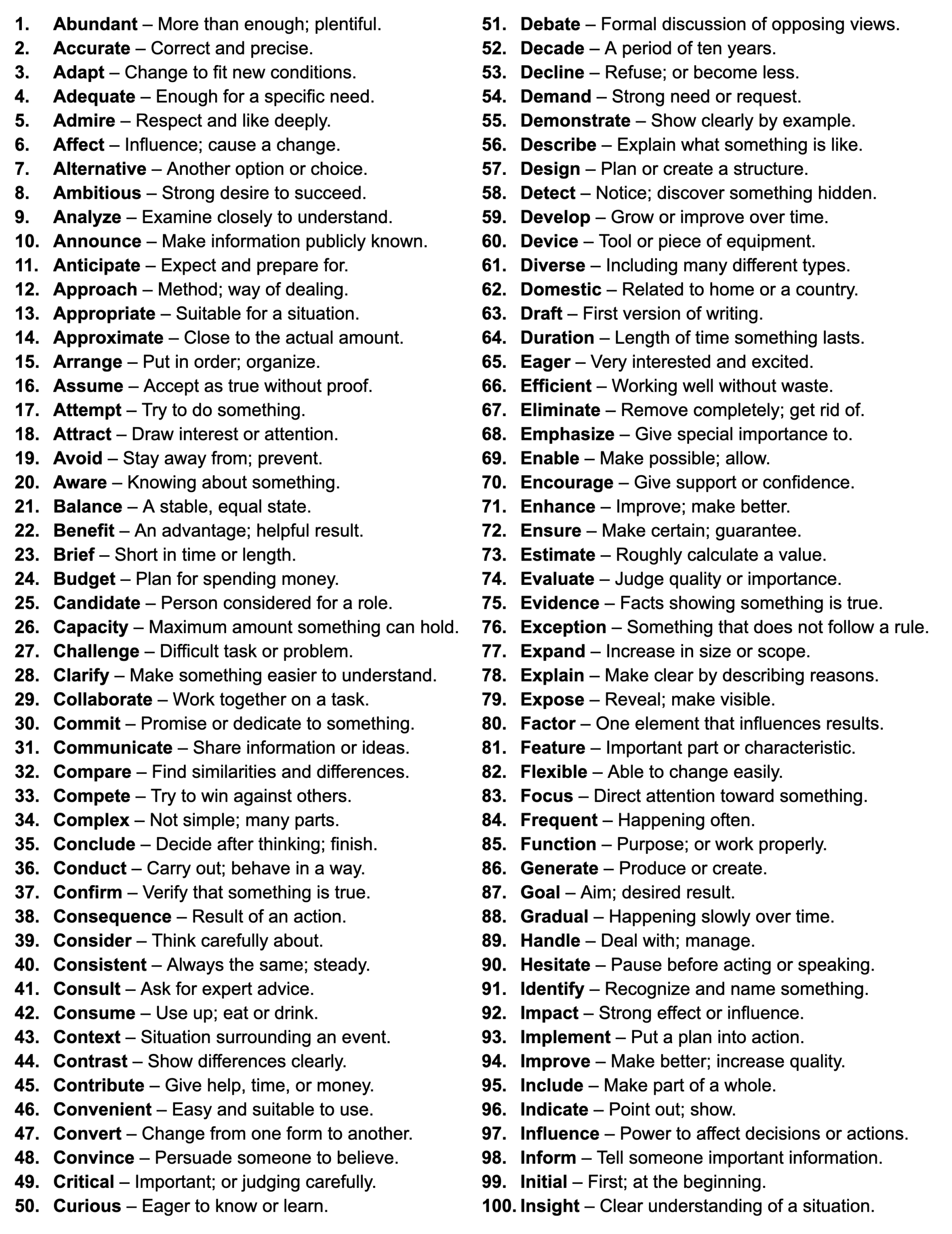 Why Vocabulary Words Matter
Better Communication
The more words you know, the more precisely you can express your thoughts. Instead of saying something is “good,” you might describe it as “exceptional,” “commendable,” or “satisfactory,” depending on the exact meaning you intend. This precision reduces misunderstandings and makes your communication more effective.
Academic and Professional Success
Standardized tests, from the SAT to the GRE, place heavy emphasis on vocabulary. Beyond testing, a strong vocabulary helps students grasp complex texts across subjects, since comprehension is closely tied to word knowledge. In the workplace, articulate communication is often linked to leadership potential and professional credibility.
Improved Reading Comprehension
Vocabulary and reading comprehension go hand in hand. When you encounter unfamiliar words while reading, your understanding of the material slows down or breaks down entirely. Building your vocabulary makes reading smoother, faster, and more enjoyable, which in turn encourages you to read more.
Cognitive Benefits
Learning new words engages memory, pattern recognition, and critical thinking. Some research suggests that a robust vocabulary is associated with stronger overall cognitive function, particularly as people age.
How to Build Your Vocabulary
Read Widely and Often
Reading is one of the most effective ways to encounter new vocabulary words in context. Diversify your reading material—novels, newspapers, academic articles, and even well-written blogs—to expose yourself to different registers and styles of language.
Keep a Vocabulary Journal
Whenever you come across an unfamiliar word, write it down along with its definition and a sentence using it. Reviewing this journal regularly reinforces retention far better than passive exposure alone.
Use Flashcards and Spaced Repetition
Apps and tools built around spaced repetition are highly effective for vocabulary retention. They prompt you to review words right before you’re likely to forget them, strengthening long-term memory.
Learn Root Words, Prefixes, and Suffixes
Many English words share Latin or Greek roots. Learning common roots like “bene” (good), “mal” (bad), or “port” (to carry) helps you decode unfamiliar words and remember them more easily, since you can recognize patterns across many different terms.
Practice Active Usage
Simply recognizing a word isn’t enough—try to use new vocabulary words in conversation or writing within a day or two of learning them. Active use cements words in your long-term memory far more effectively than passive review.
Play Word Games
Crossword puzzles, Scrabble, and word-association games make vocabulary building enjoyable rather than tedious. These games also train you to think flexibly about word meanings and relationships.
Practical Tips for Different Goals
- Students preparing for exams: Focus on high-frequency academic and test-specific word lists, and practice using them in essay writing.
- Professionals: Build industry-specific vocabulary to communicate more credibly with colleagues and clients.
- Language learners: Prioritize the most commonly used words first, since a relatively small set of words covers the majority of everyday communication.
- Writers: Keep a thesaurus handy, but use it to refine precision rather than to sound impressive—clarity should always come first.
Final Thoughts
Building a strong vocabulary is a gradual, ongoing process rather than a one-time task. By reading widely, practicing active recall, and applying new words in real conversations, you can steadily expand your vocabulary and become a clearer, more confident communicator. Small, consistent efforts compound over time into a genuinely impressive command of language.
Frequently Asked Questions
1. How many vocabulary words does the average adult know? Estimates vary, but most native English-speaking adults know somewhere between 20,000 and 35,000 words, including both active and passive vocabulary.
2. What is the best age to start building vocabulary? Vocabulary building can start as early as toddlerhood and continue throughout life. While early childhood is a critical period for language acquisition, adults can still significantly expand their vocabulary with consistent practice.
3. How many new words should I learn per day? Learning 5 to 10 new words per day, with regular review, is a sustainable pace for most learners without becoming overwhelming.
4. Do vocabulary apps actually work? Yes, especially those using spaced repetition, which has strong research support for improving long-term word retention compared to simple memorization.
5. Is it better to learn vocabulary in context or through word lists? Both methods have value, but learning words in context—through reading or real sentences—tends to improve retention and usage more than isolated word lists alone.
6. Can improving vocabulary help with public speaking? Absolutely. A broader vocabulary allows for more precise, varied, and engaging language, which makes speeches and presentations more compelling and easier to follow.